How might AI make the thinking process visible in group learning?
Product, Agentic UX, Education
Co CerebralDesigning AI learning tools that make reasoning visible.
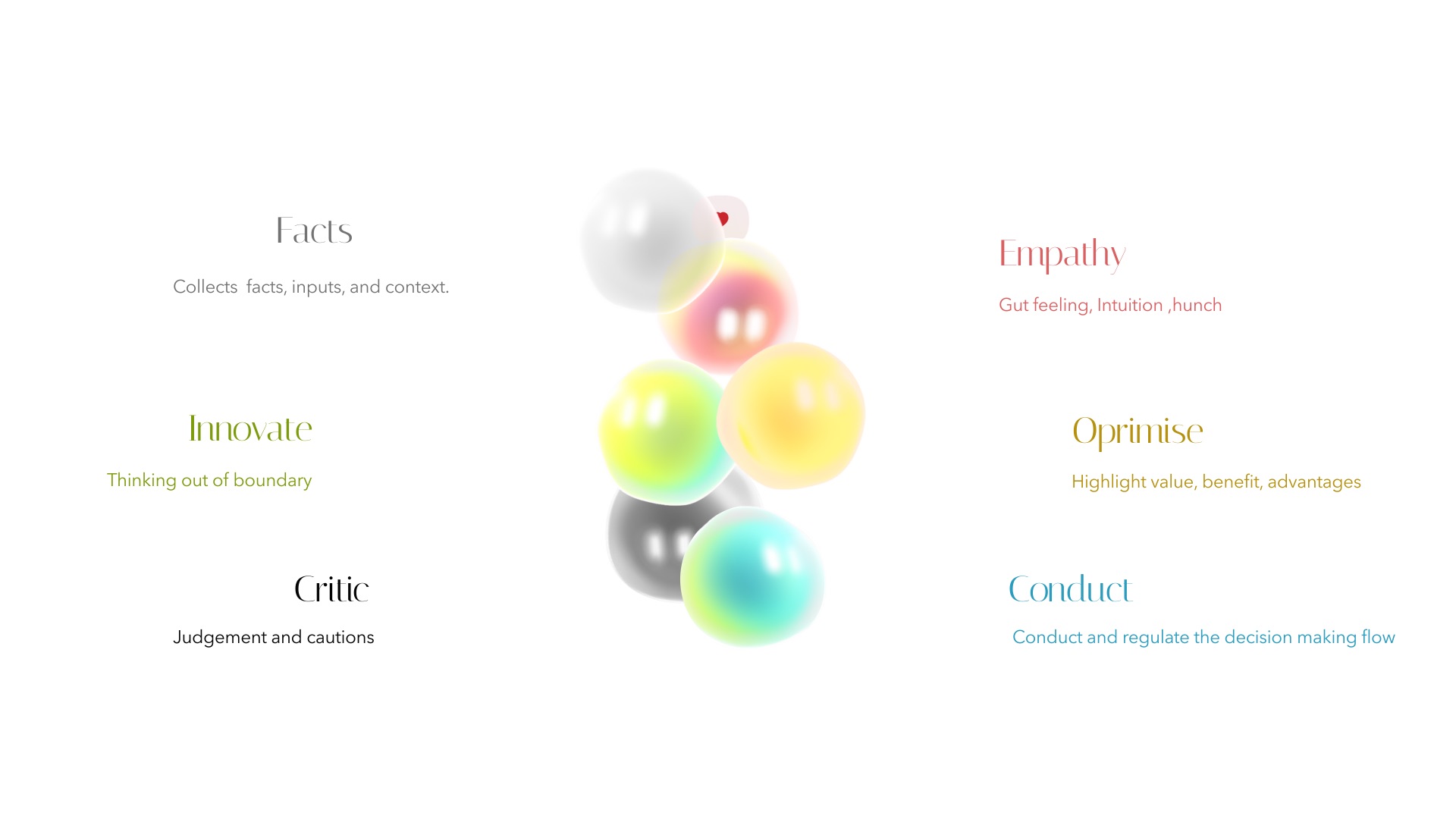
Co Cerebral translates an RCA Design Futures thesis into an agentic learning product. Six Thinking Hats become distinct AI roles so a study group can hear evidence, emotion, critique, optimism, creativity, and process control as separate voices.
★ Live Demo
Cerebral Learning embodied demo. Drag to inspect each agent's presence while the product orchestrates specialised LLM agents through voice and text affordances.
Impact
Built a working agentic learning prototype that turns a Design Futures thesis into a product direction for AI-supported group reasoning. The strongest outcome is a clear interaction model: students do not receive one polished answer, they compare distinct reasoning roles and discuss how the answer is formed.
Role
Timeline
Team
The Challenge
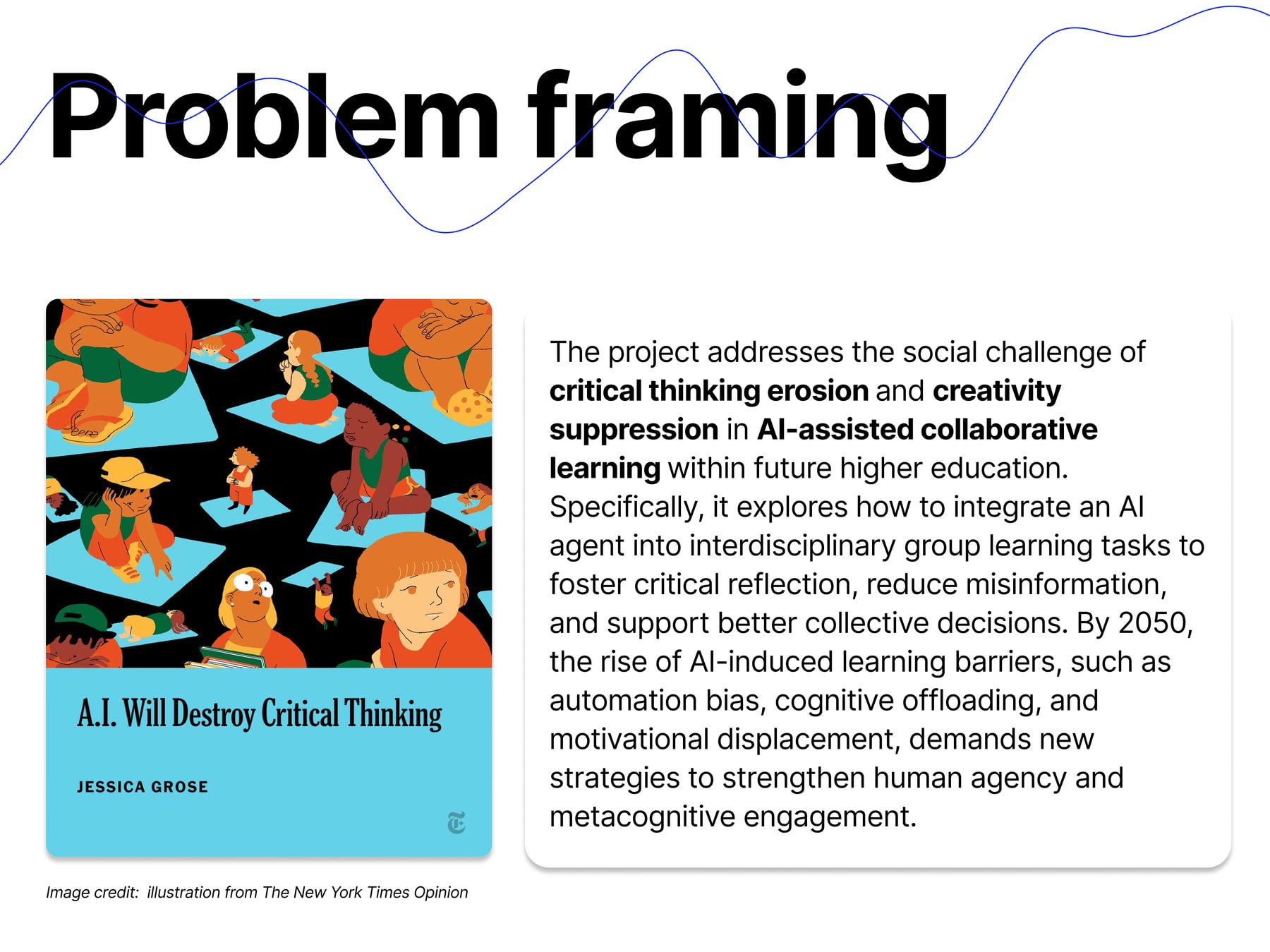
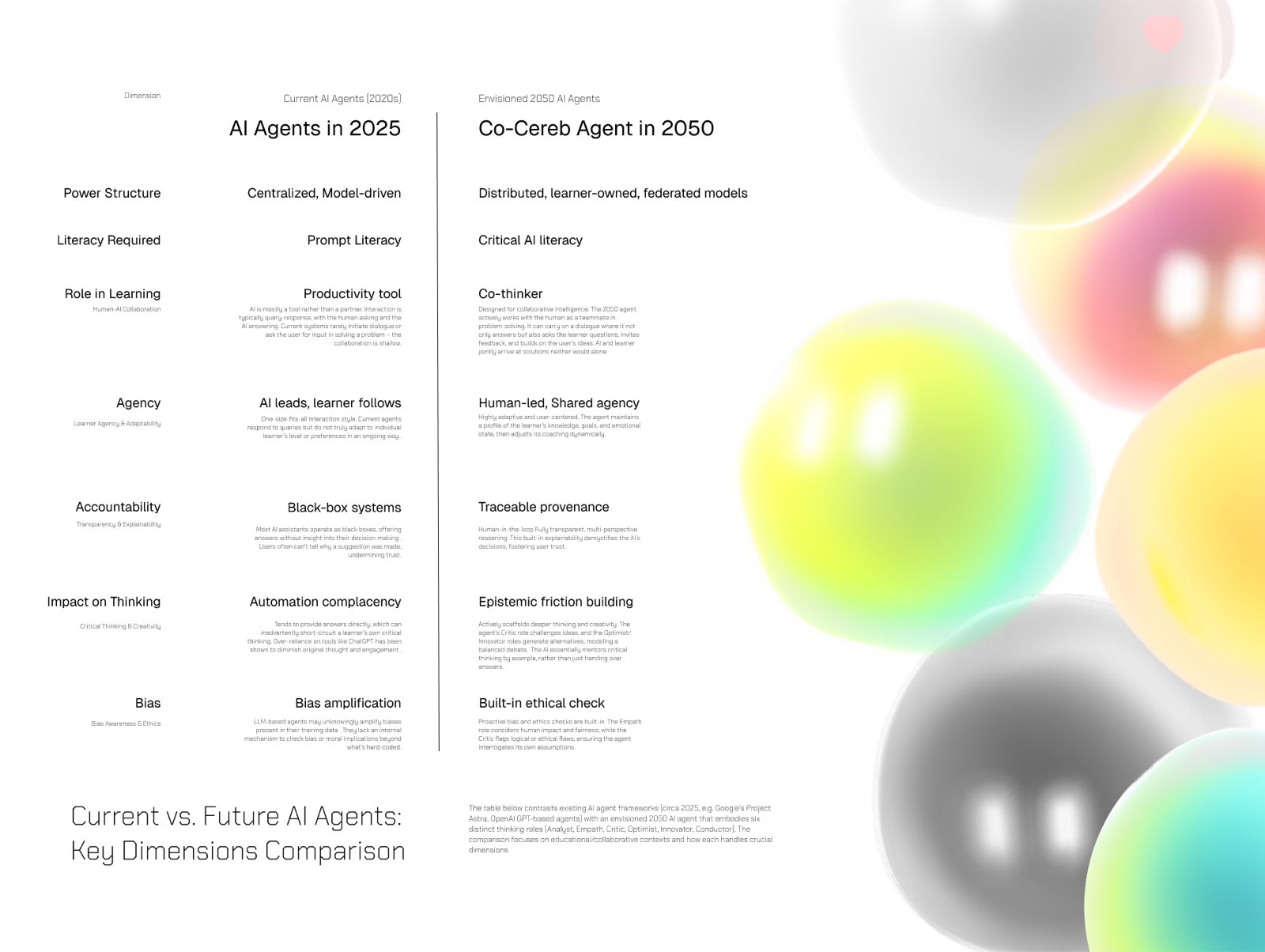
In the era of AI, students can use AI to bypass the thinking process instead of developing it. Open chat can make an answer look complete before the group has questioned evidence, emotion, risk, optimism, or alternatives.
Co Cerebral frames that problem as an interface challenge: how can AI make thinking visible enough for students and teachers to discuss it, instead of hiding the process behind one fluent response?
Design logic
Questions & Key Decisions
01Key decisionTurn Six Hats into the product constraintOpen-ended chat made the tutor feel smart, but it did not reliably make the learner think in different...
- Problem
- Open-ended chat made the tutor feel smart, but it did not reliably make the learner think in different modes.
- Decision
- I treated the Six Thinking Hats as the interaction model: each agent owns one cognitive mode, one voice, and one turn-taking behavior.
- Why it worked
- The framework gives AI a legible job. It prevents the system from collapsing into a single answer and lets the group compare evidence, emotion, risk, optimism, creativity, and synthesis.
- Outcome
- The prototype, thesis materials, and tutor-facing scenarios all center on visible reasoning roles rather than final-answer generation.
02Key decisionMake reasoning embodied, not invisibleLearners could not tell which perspective was speaking when all guidance arrived as the same text...
- Problem
- Learners could not tell which perspective was speaking when all guidance arrived as the same text interface.
- Decision
- I paired voice input and speech output with distinct agent presences and visual states for each reasoning role.
- Why it worked
- Embodiment helps students remember that they are moving through a structured thinking process, not simply prompting a chatbot.
- Outcome
- The demo gives tutors and students a concrete interface language for discussing multi-agent learning.
Research & Discovery
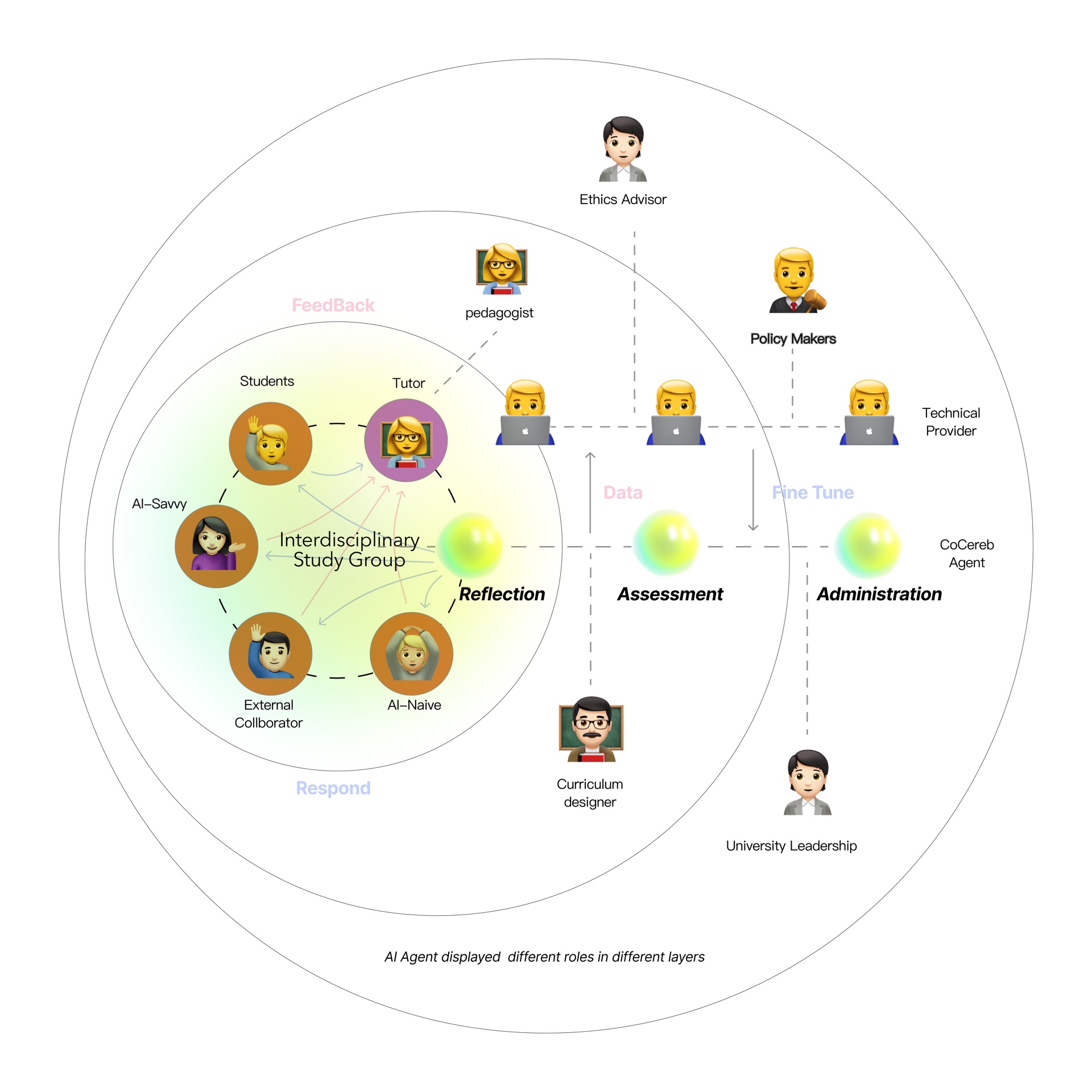
The project came from an 18-month RCA Design Futures thesis on AI in higher education. I used horizon scanning, stakeholder mapping, scenario building, co-speculation with students and tutors, and Six Thinking Hats as the reasoning method.
The key hypothesis was that a constrained agent system could make group thinking more visible than open chat. The research pointed to three needs: students need cognitive scaffolding, tutors need orchestration support, and institutions need AI literacy practices they can explain.
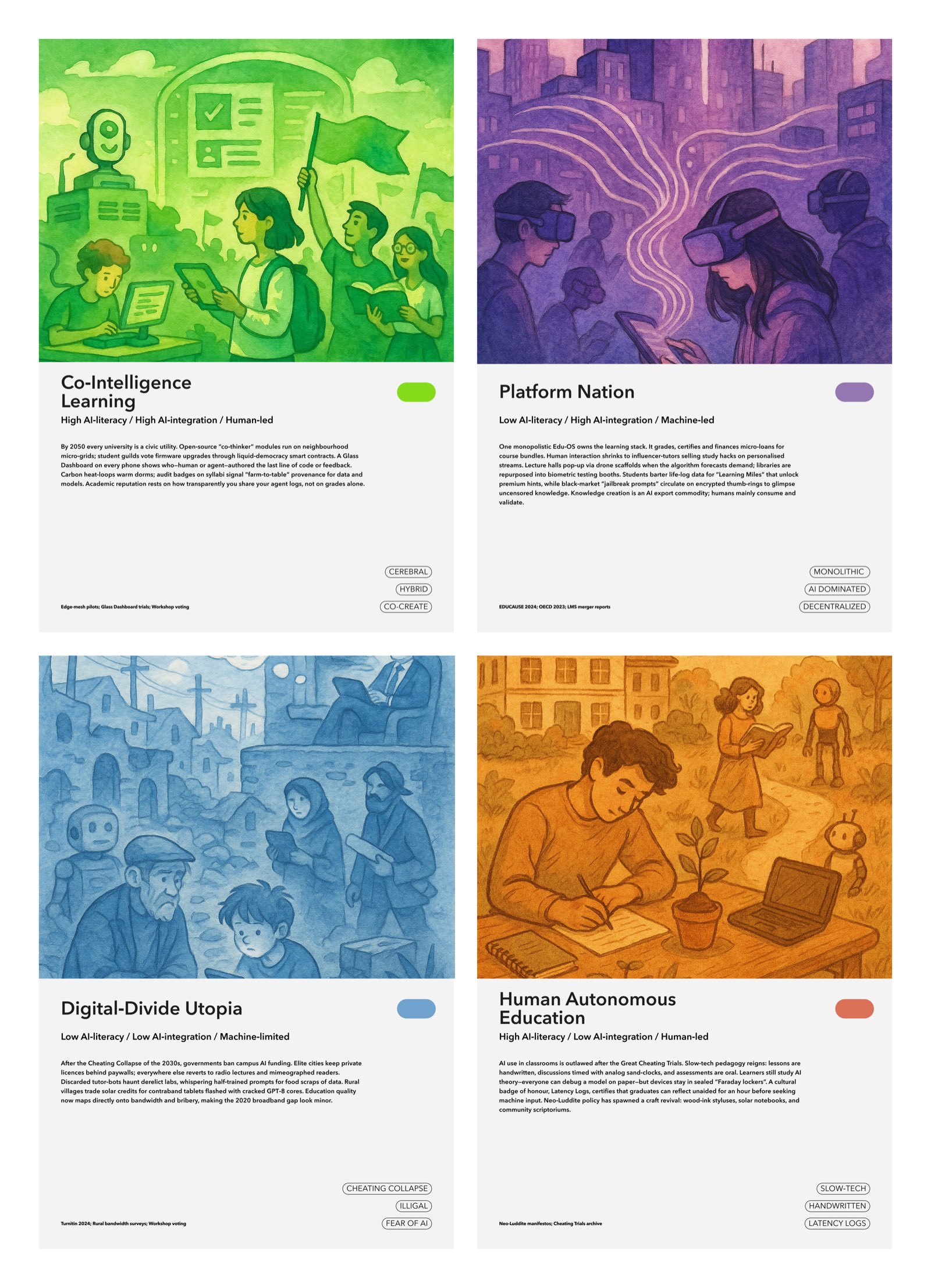
Research flow, how a learner moves through the Six Hats rotation, voice-mediated throughout.
Design Strategy
I kept the product deliberately structured. Six roles became the core interface: facts, emotion, critique, optimism, creativity, and process control.
That structure does two jobs. It gives each AI agent a clear responsibility, and it helps the group see when they are exploring evidence, risk, emotion, or synthesis.
Implementation & Pipeline
The prototype combines voice interaction, agent roles, and embodied visual presence. Voice makes the system feel like a group dialogue; separate agents prevent every response from sounding like the same assistant.
The build remains transparent as a learning prototype: the point is to test the reasoning ritual and interface model before scaling it into wider school workflows.
Results & Impact
The project produced a working agentic learning prototype, a research thesis, scenario materials, stakeholder maps, and a clear product thesis for Bold Ideas Lab. RCA press selected Julian as a strong spokesperson for AI in creative education partly because of this research direction.
Lessons Learned
The most valuable AI interface was not the most open one. A useful constraint can protect human authorship because it gives learners a structure for questioning, comparing, and deciding.
What's Next
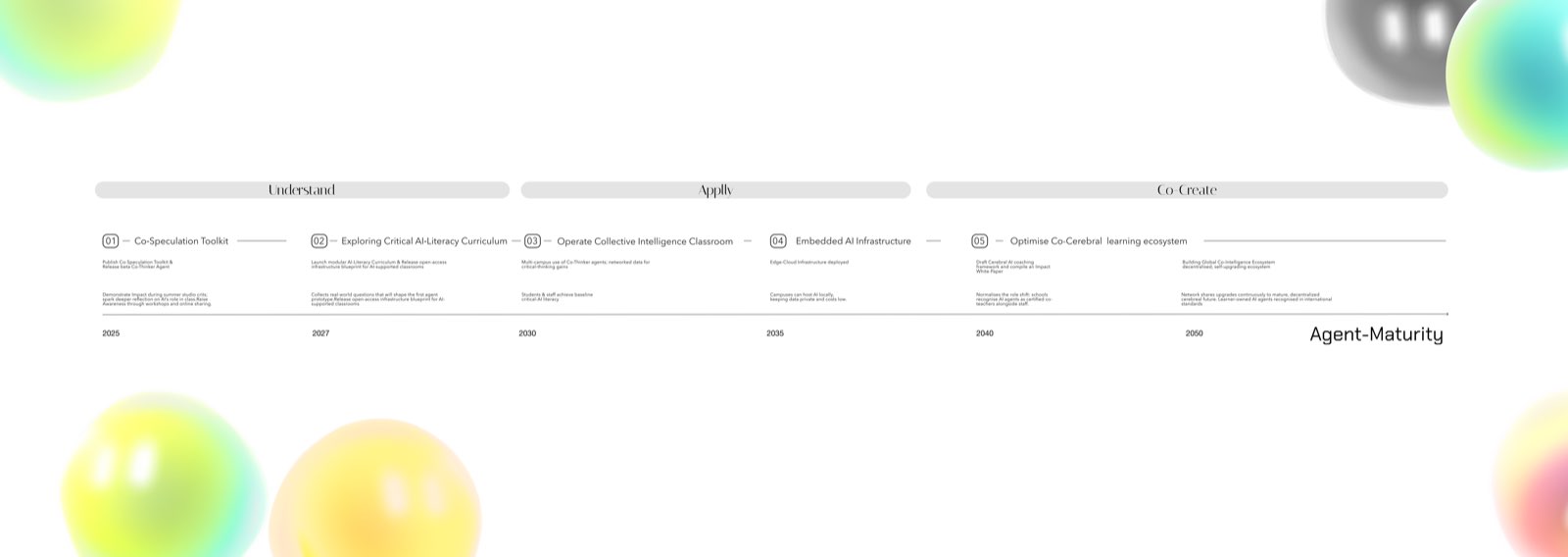
The next validation step is to test the six-role flow with a real study group and compare whether students produce more balanced reasoning than they do with open chat. A second track is teacher-facing orchestration: what signals help educators support discussion without turning learning into surveillance?
Continue exploring