How can a future mobility concept make low-carbon behaviour feel desirable instead of punitive?
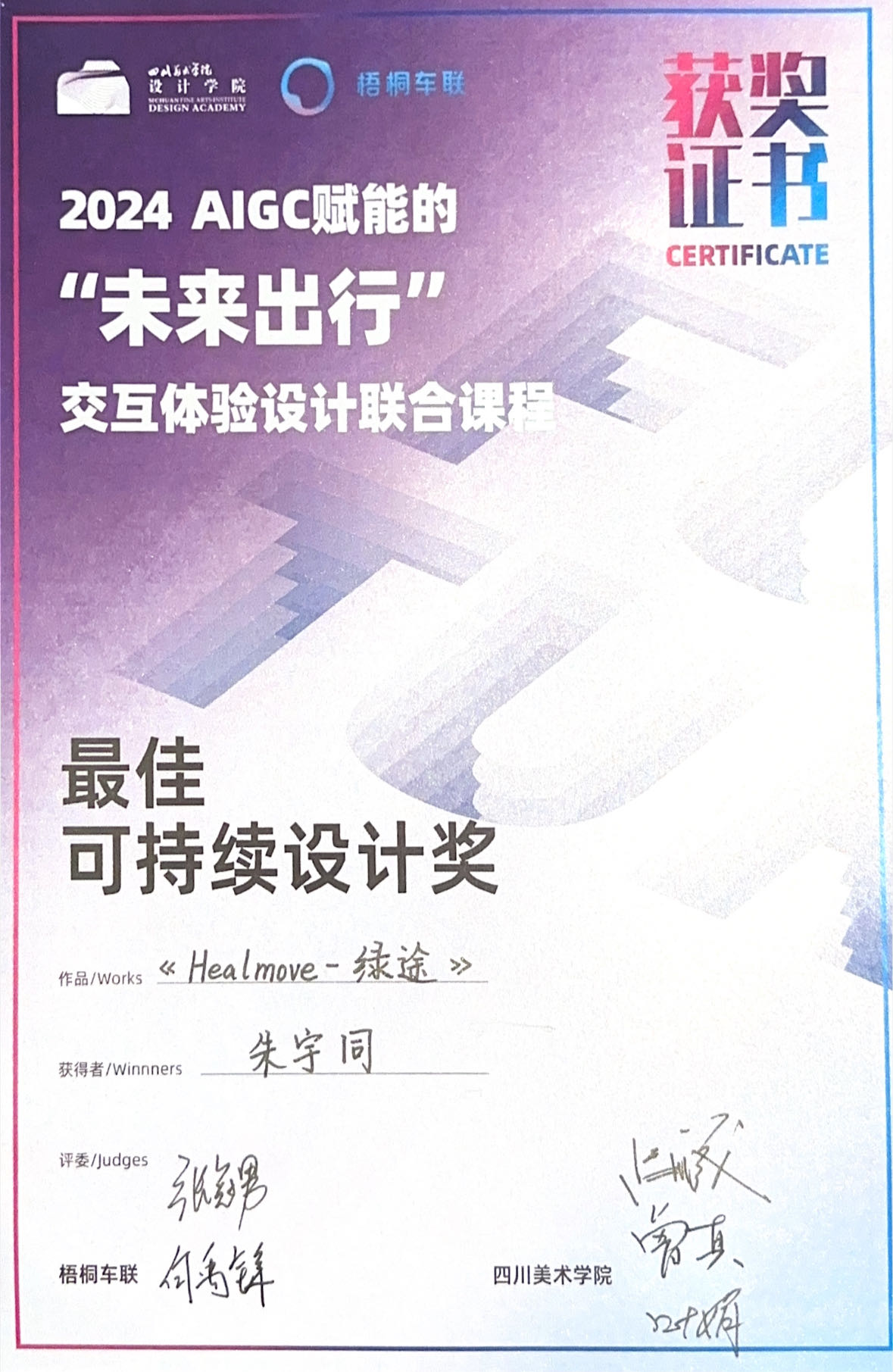
Best Sustainable Design Award · SCFAI × Wutong Carlink · 2024
GenAI Content Production, Future Mobility
HealmoveBy 2045, can the car become a third space for health rather than a fourth source of sedentary time?
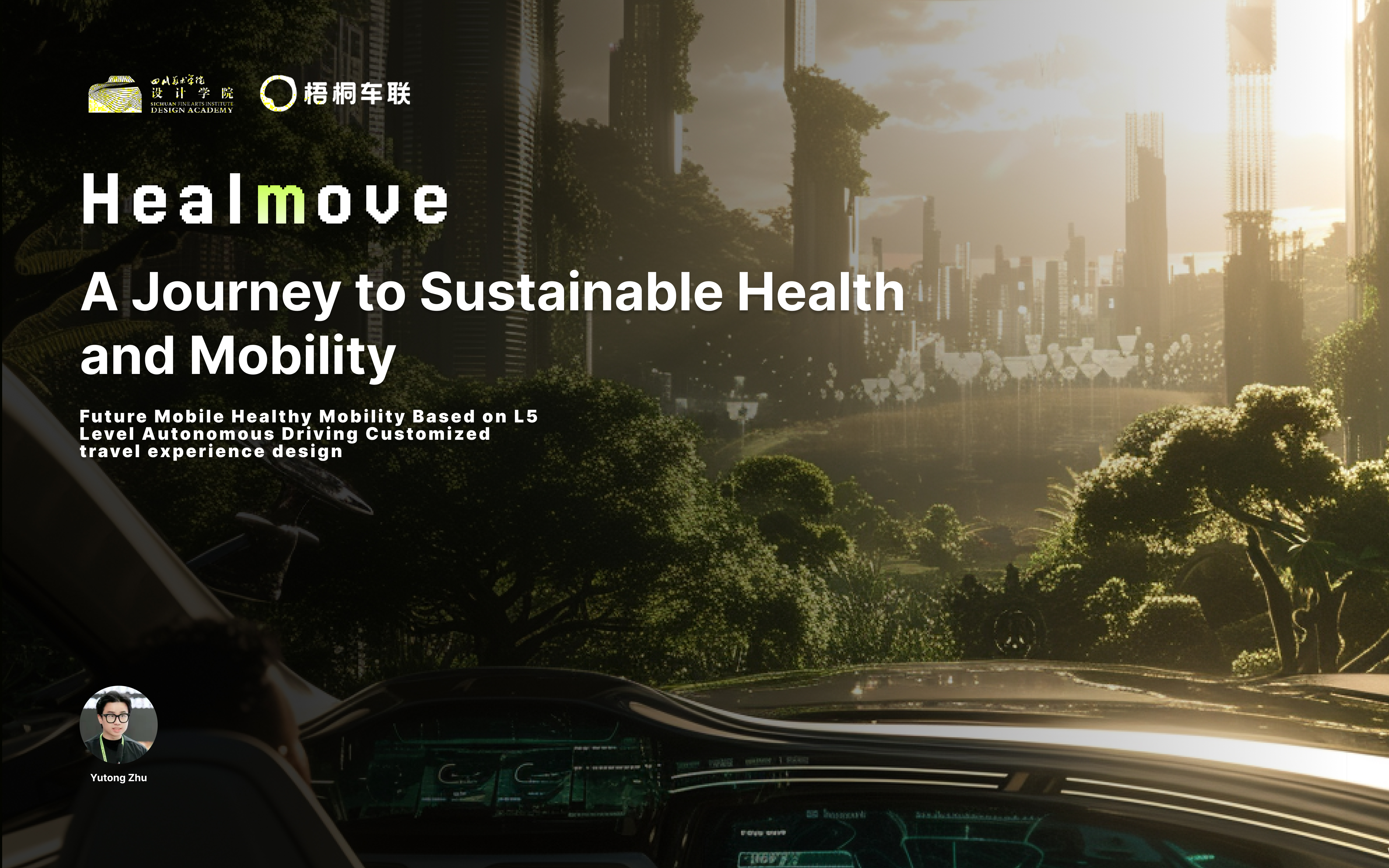
GreenMove is a future-mobility design fiction produced during the SCFAI and Wutong Carlink joint course. The film used a controlled GenAI production workflow: strategy and script, AI shot generation, Runway Gen-1 motion, and human edit direction.
Download case PDF
Impact
A pre-mainstream GenAI film workflow for a future-mobility concept: ChatGPT for scenario logic, MidJourney for shot generation, Runway Gen-1 for image-conditioned motion, and human editing with art direction for a coherent 1m20s reel.
Role
Timeline
Team
The Challenge
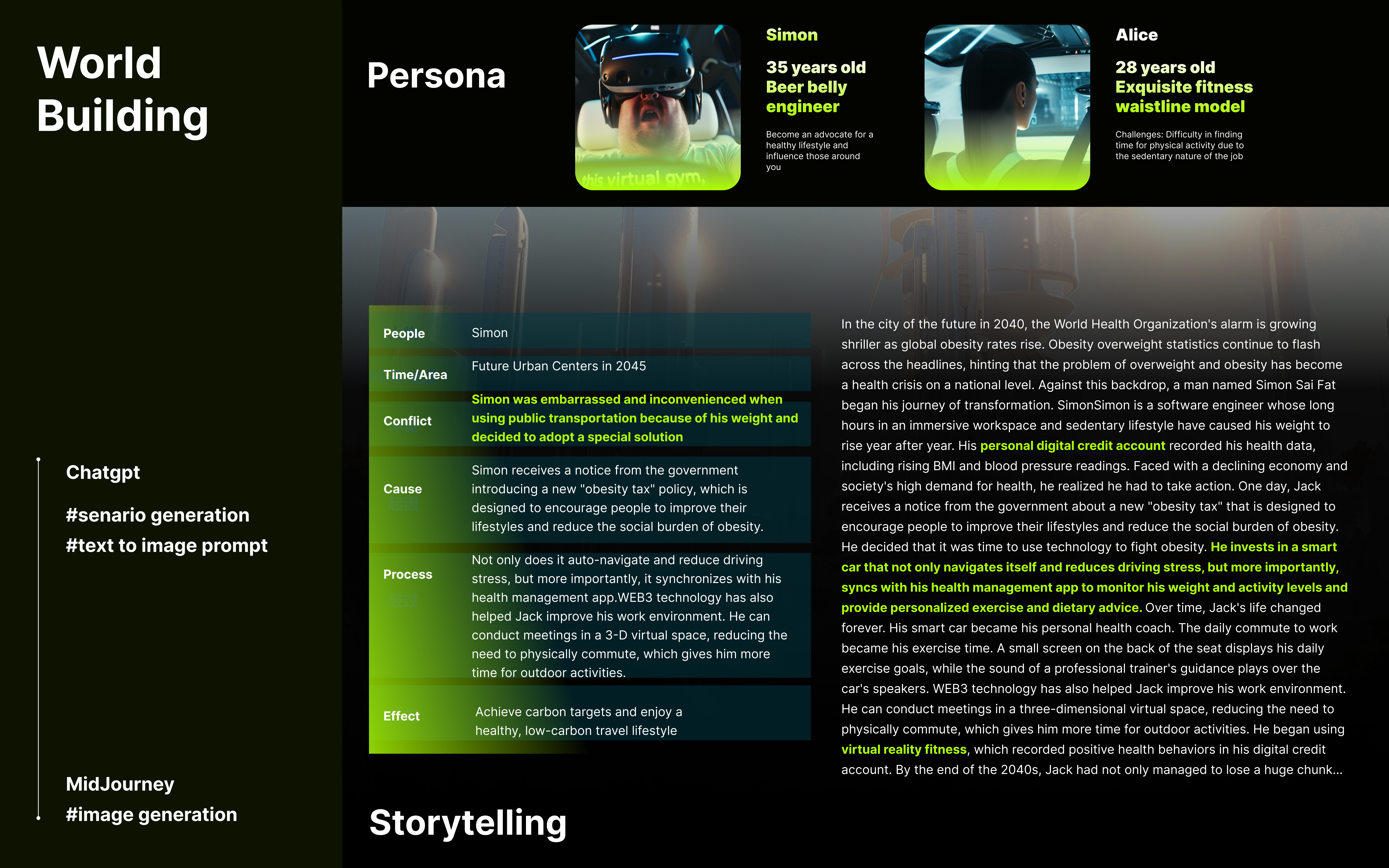
The future-mobility brief could easily become a speculative car render. I reframed it around a user behavior problem: low-carbon choices rarely feel desirable when daily mobility is shaped by habit, convenience, cost, and comfort.
Design logic
Questions & Key Decisions
01Key decisionMake carbon behaviour tangibleCarbon metrics alone do not explain why someone would change a daily mobility habit.
- Problem
- Carbon metrics alone do not explain why someone would change a daily mobility habit.
- Decision
- I linked carbon feedback to trip rituals, cabin moments, and service touchpoints.
- Why it worked
- Sustainable choices become more persuasive when they are embedded in the experience itself.
- Outcome
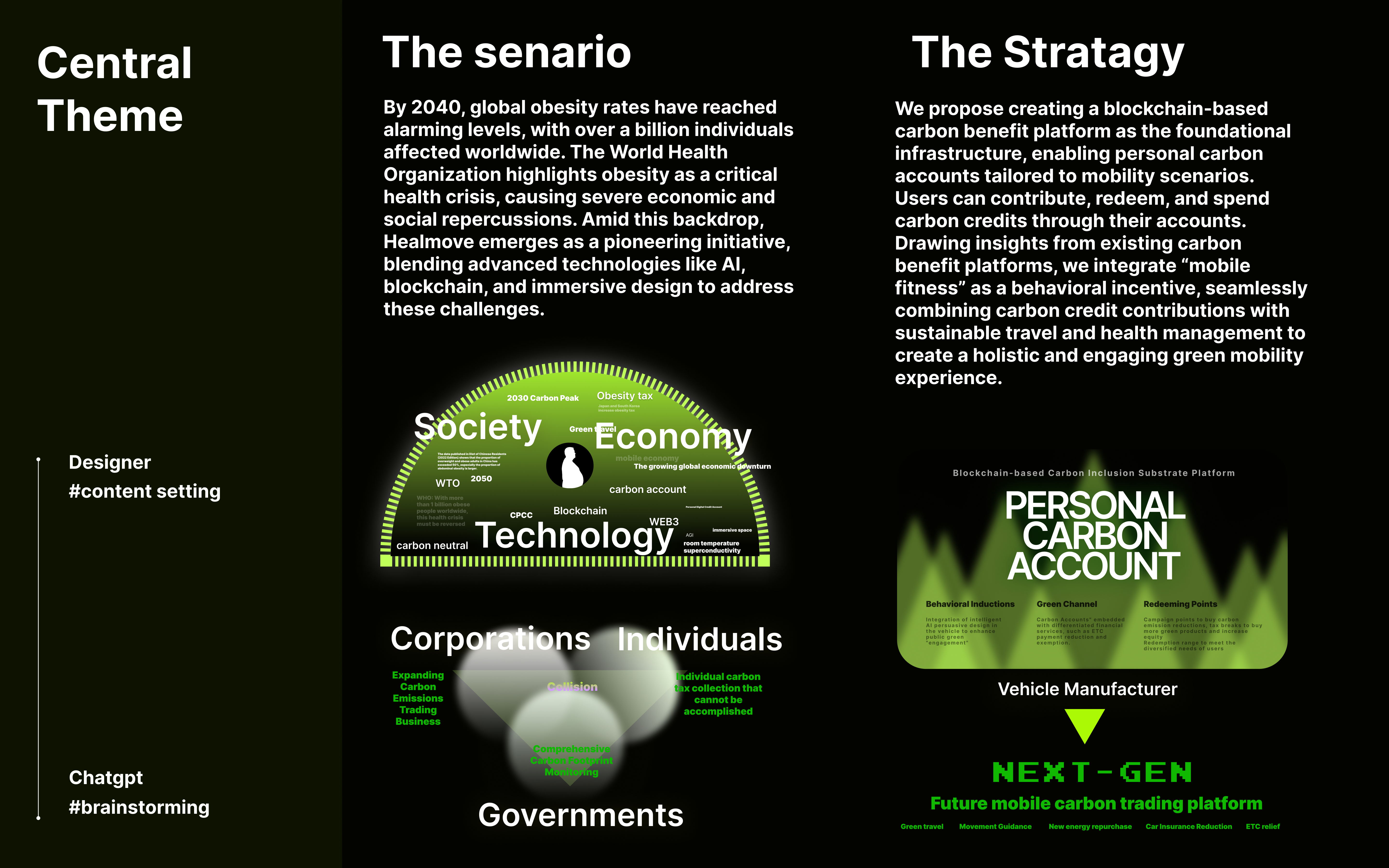
- the boards connect cabin experience, carbon account logic, AI guidance, and post-trip behavior instead of stopping at a vehicle image.
02Key decisionControlled GenAI shot pipelineEarly generative video produced atmosphere, but the clips became disconnected without a story process.
- Problem
- Early generative video produced atmosphere, but the clips became disconnected without a story process.
- Decision
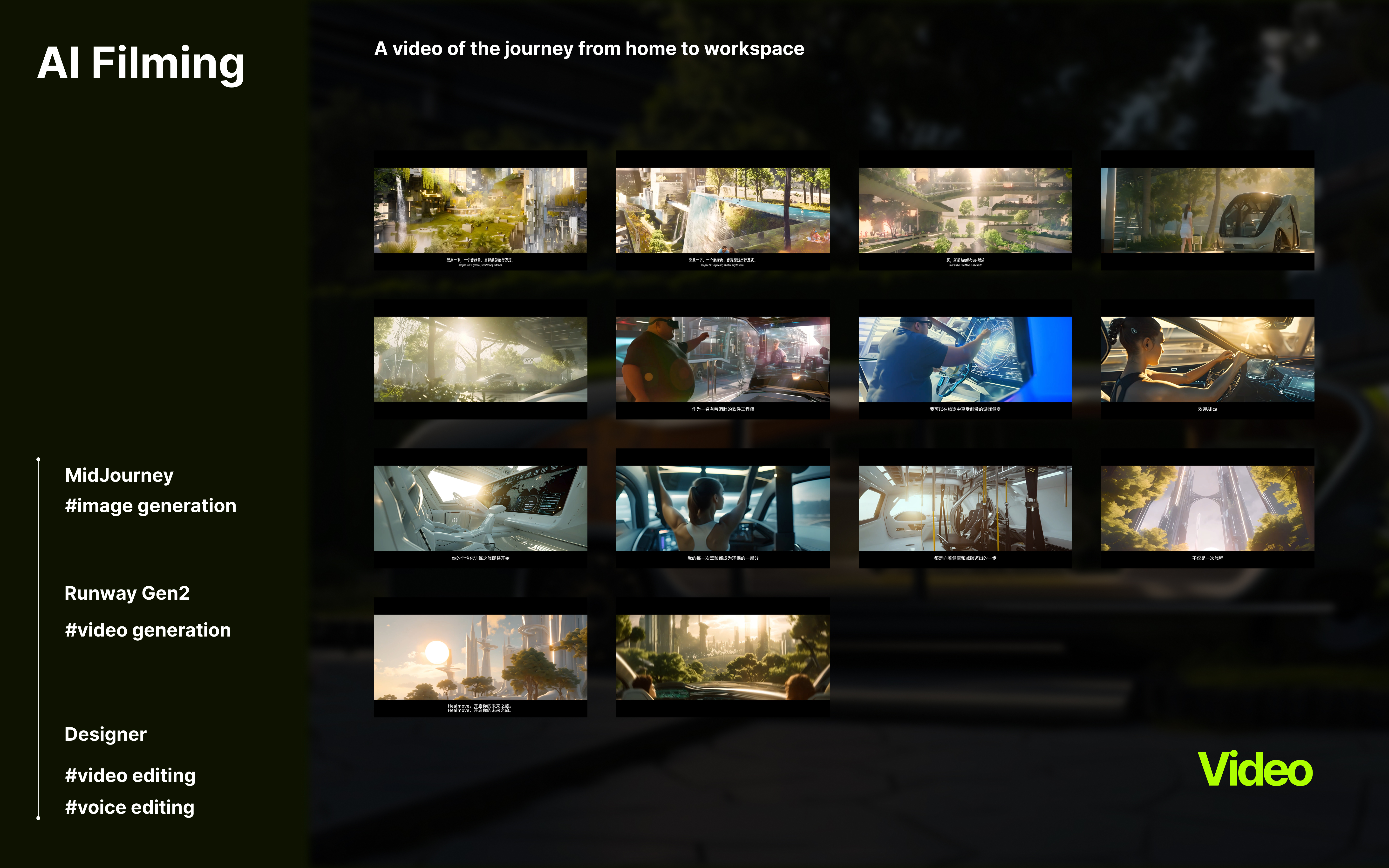
- I used a film pipeline: define story beats, generate key stills, animate selected frames, then edit with human pacing.
- Why it worked
- This makes the AI output accountable to a storyboard and service concept, not just to visual novelty.
- Outcome
- the final film follows defined story beats and service moments rather than a loose sequence of generated clips.
Research & Discovery
The project started with a behavioural tension: people understand climate urgency in the abstract, but mobility decisions are made through habit, convenience, and immediate cost. The design opportunity was to make a future mobility system emotionally legible, not only technically plausible.
Design Strategy
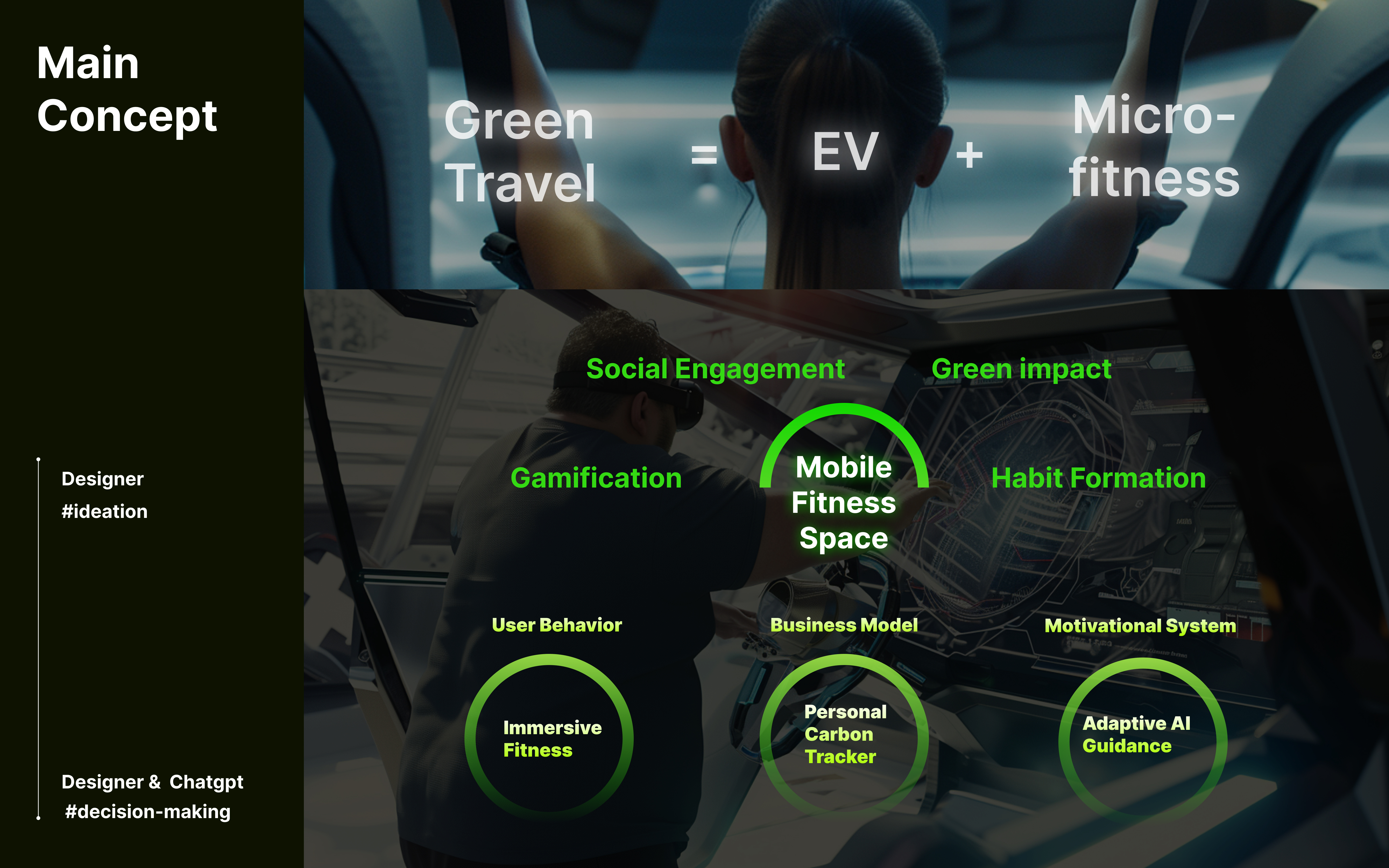
The service concept connects low-carbon travel, micro-fitness, adaptive guidance, and personal carbon feedback. Instead of making sustainability a dashboard metric, I placed it inside trip rituals and cabin moments.
The AI production strategy matched that service logic: story beats first, generated frames second, human edit last.
Implementation & Pipeline
The production method was deliberately pipeline-based rather than one-shot. I used ChatGPT to structure the obesity-tax worldbuilding and persona arcs, MidJourney to generate the key frames and environment stills, Runway Gen-1 to animate selected frames through image-conditioned video, then edited the final sequence in Premiere. The value was not just the final film, but the ability to control a repeatable GenAI content workflow with human art direction at each stage.
Results & Impact
The project delivered a 1m20s AI-filmed reel, a typeset case book, a worldbuilding deck, and a service-platform diagram. It received Best Sustainable Design Award in the SCFAI and Wutong Carlink course context.
Lessons Learned
The strongest speculative work connected carbon accounting to everyday rituals rather than presenting sustainability as a dashboard metric. The strongest AI workflow lesson was similar: generative tools are useful when the human designer owns the brief, shot list, selection criteria, and final edit.
What's Next
A next iteration could prototype the service touchpoints around booking, in-vehicle feedback, and post-trip reflection with real users.
Continue exploring