How might a public-wall platform preserve authorship and spatial context?
Service Design, Spatial UX, MR
SprayScapeHow can public wall art keep authorship, context, and place?
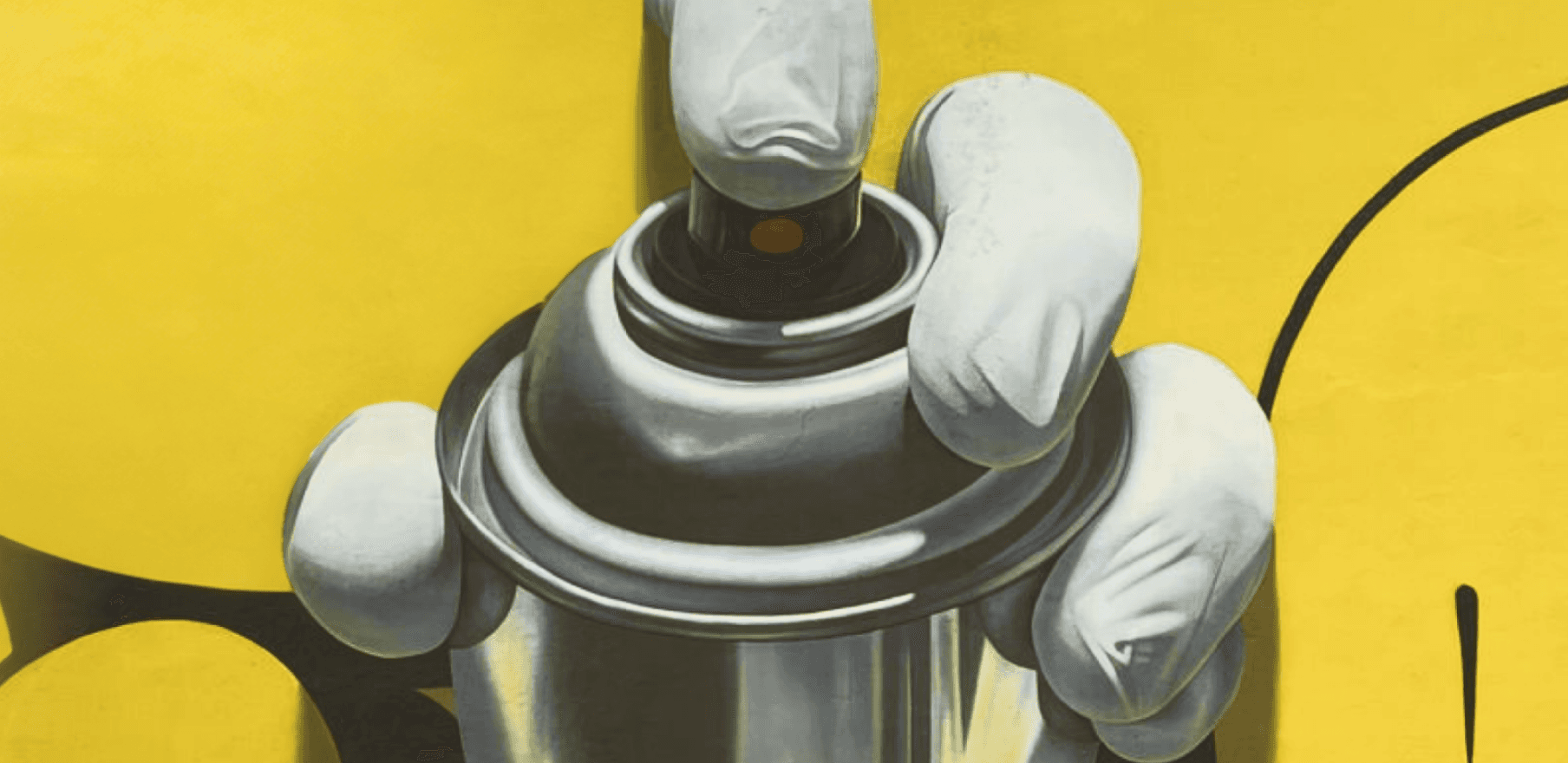
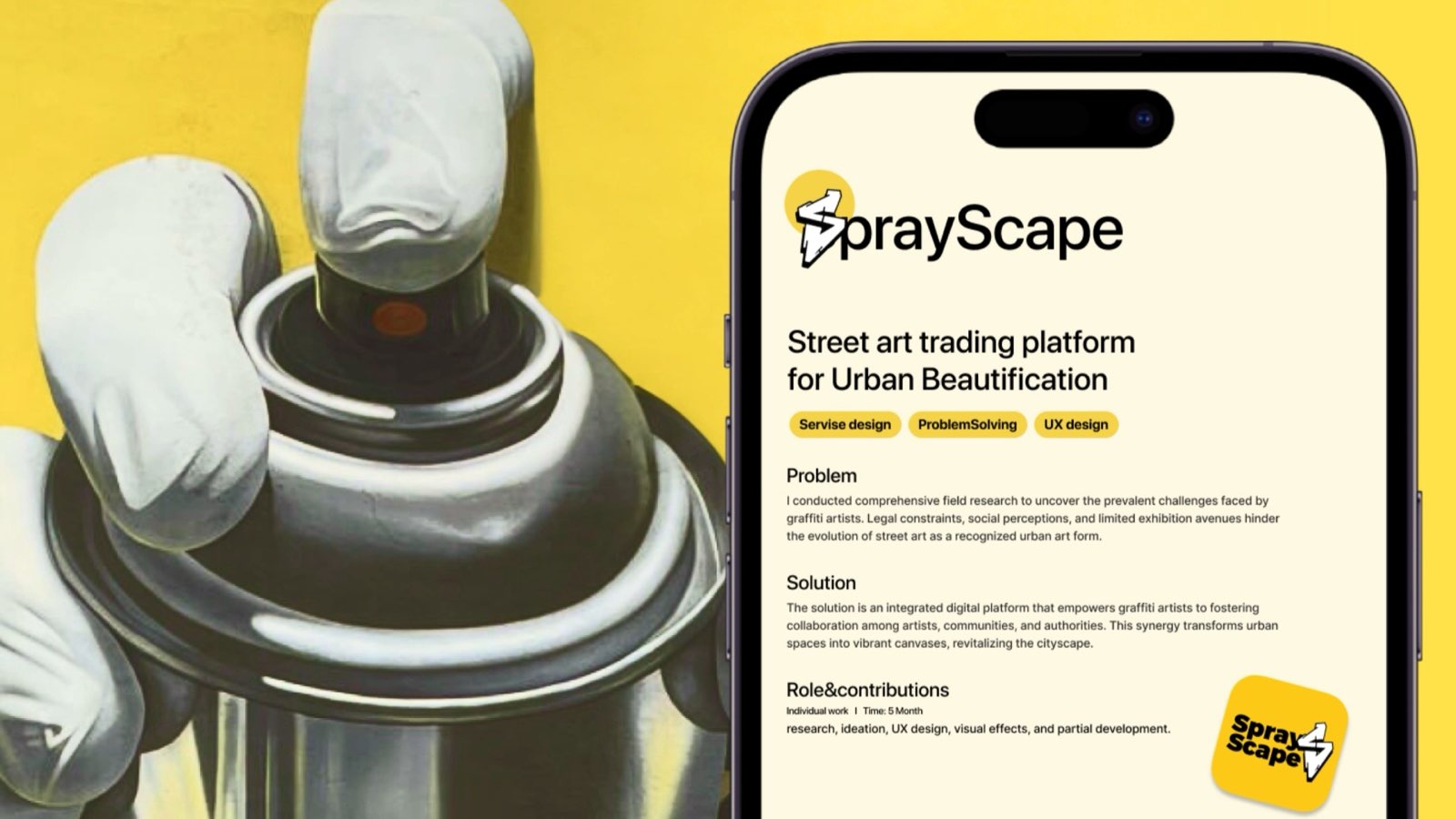
SprayScape treats street art as a public system, not only a visual feed. Artists, viewers, property owners, and cities negotiate wall context through capture, archive, and mixed-reality replay.
Impact
A spatial interaction and service system for public wall-making. SprayScape reframes graffiti documentation as a negotiation between artist authorship, city context, wall surface, time, and archive.
Role
Timeline
Team
The Challenge
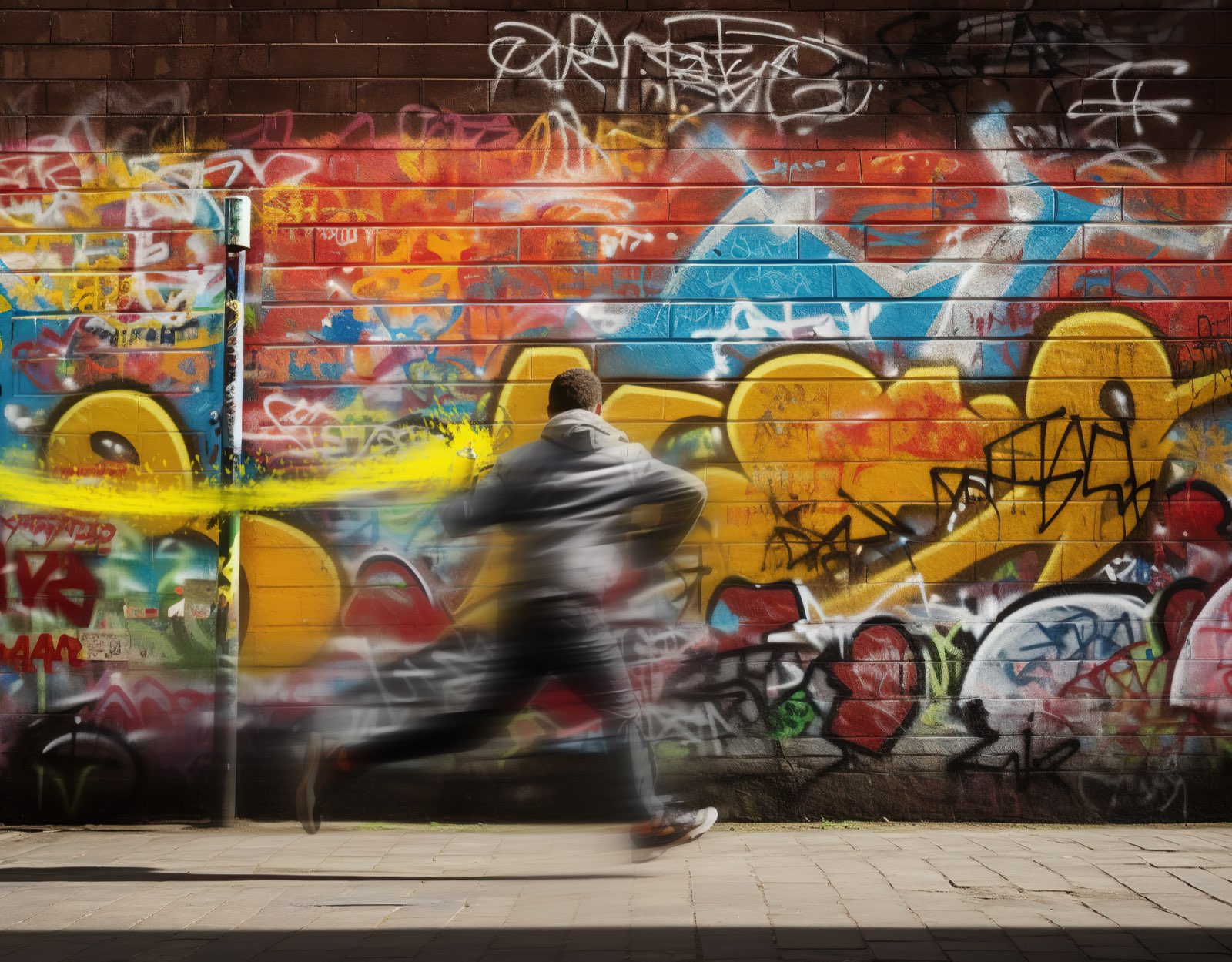
Street art is temporary, contested, and deeply tied to place. A photo can preserve the image, but it often loses the wall, scale, neighborhood, authorship, and lifespan of the work.
The design challenge was to build an archive that keeps street art connected to public context instead of flattening it into a generic image feed.
Design logic
Questions & Key Decisions
01Key decisionTreat the wall as part of the data modelA cropped photo can document an artwork, but it strips away the surface, neighbourhood, and temporal...
- Problem
- A cropped photo can document an artwork, but it strips away the surface, neighbourhood, and temporal context that made the work meaningful.
- Decision
- I framed each piece as a spatial record: artwork plus wall, location, authorship, and time.
- Why it worked
- Street art is inseparable from public context. Preserving that context makes the archive more truthful and more useful.
- Outcome
- the portfolio boards shift the product from artwork upload to contextual wall record, with location, author, surface, and time as core information.
02Key decisionAdd MR as contextual replayA normal gallery view cannot show how a temporary artwork occupied public space.
- Problem
- A normal gallery view cannot show how a temporary artwork occupied public space.
- Decision
- I added an MR direction that lets the work be revisited in relation to a real or reconstructed wall.
- Why it worked
- Spatial computing carries scale and placement, which are exactly the details lost in ordinary documentation.
- Outcome
- the MR concept shows why scale and placement matter when a temporary work is removed or covered.
Research & Discovery
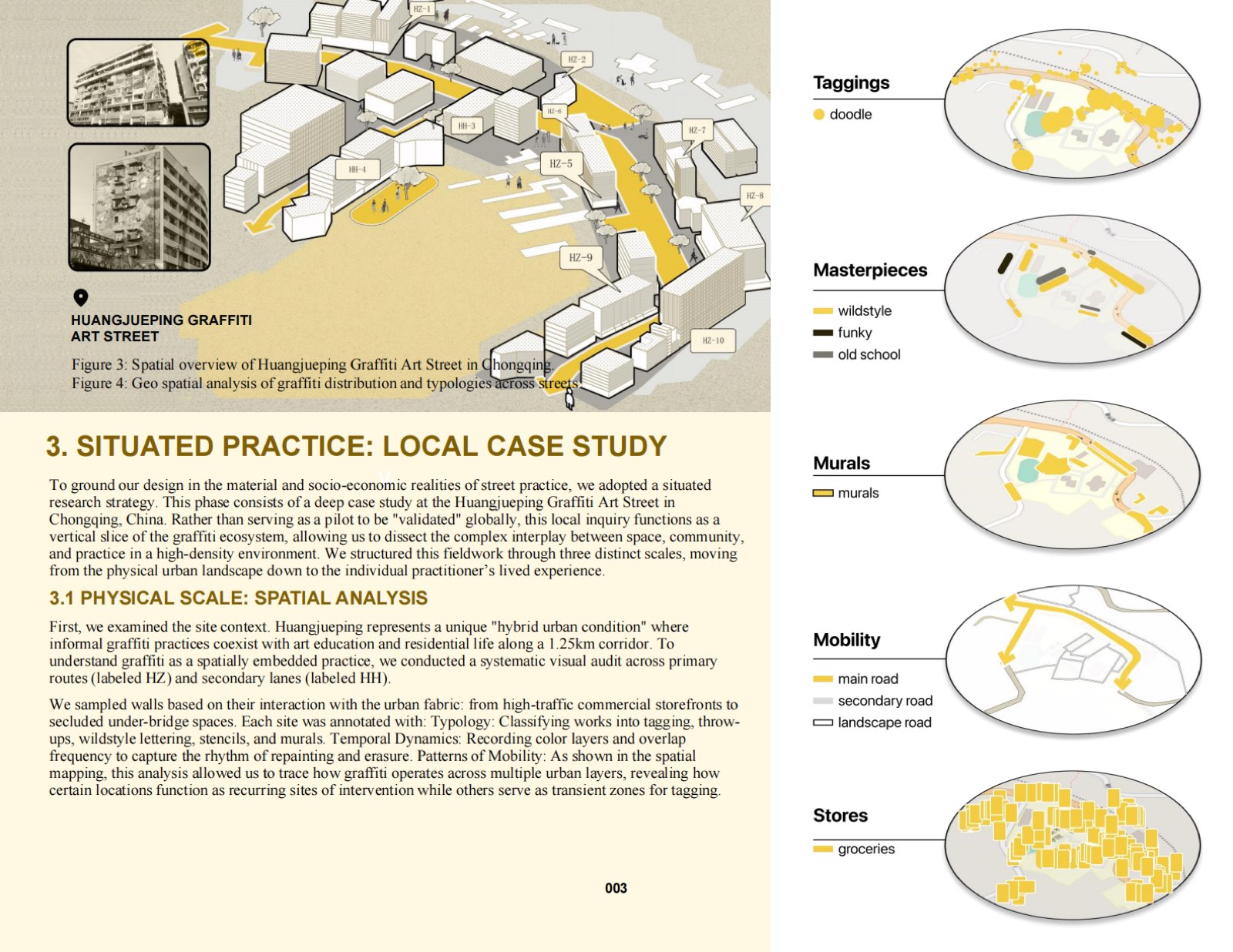
I treated the wall as a stakeholder system. Artists need authorship and visibility; viewers encounter work in place; cities manage public surfaces and conflict.
The hypothesis was that a useful archive needs metadata about surface, time, location, and audience, not only an image upload. That led to the later MR direction: spatial computing can preserve scale and wall context more clearly than a flat gallery.
Design Strategy
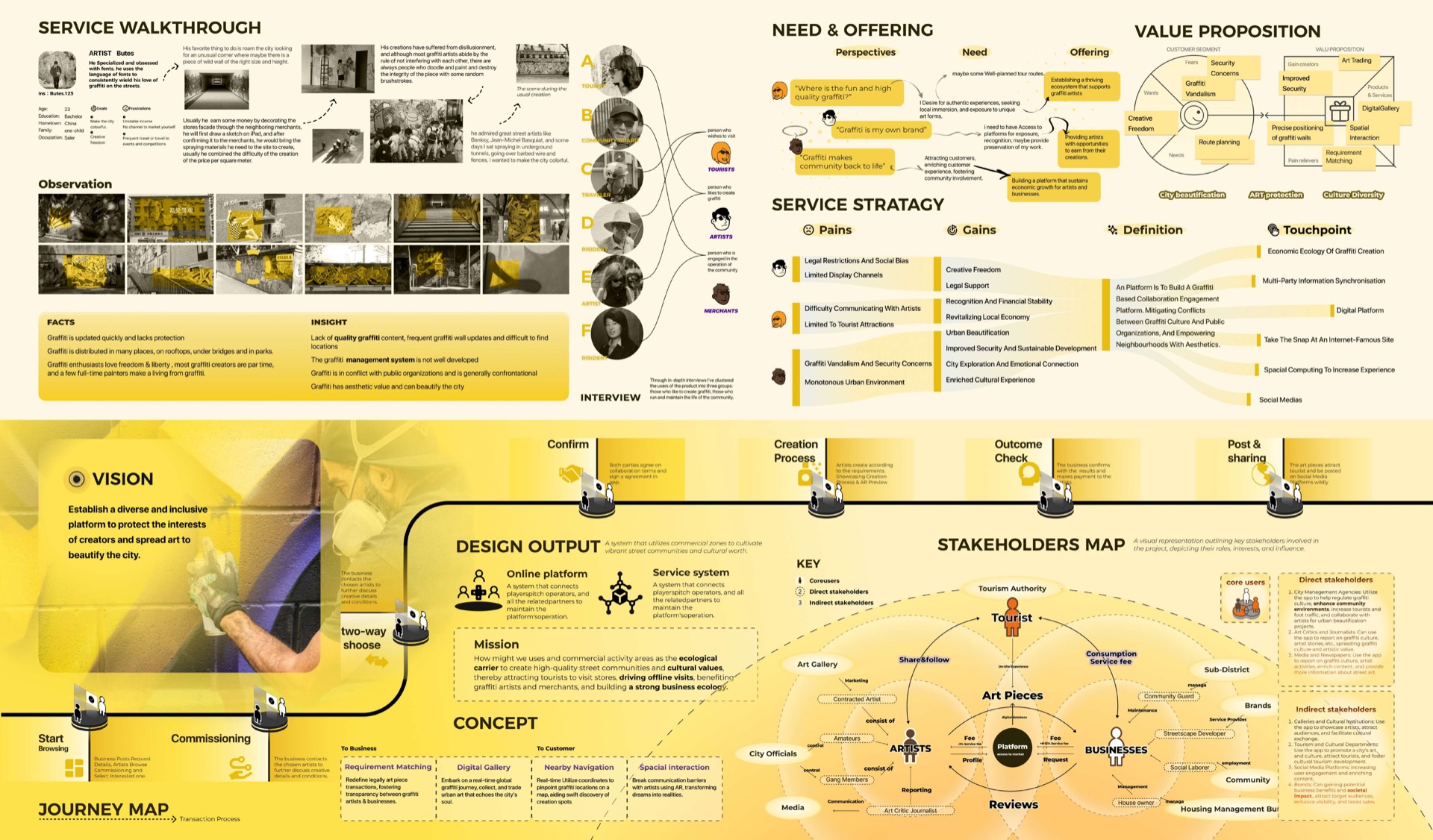
The product direction moved from posting finished artwork toward building spatial records. Each work is understood through image, wall, location, author, and time.
The MR layer became a design decision because it supports contextual replay. The viewer can revisit a work in relation to a real or reconstructed wall, not only as a cropped asset.
Implementation & Pipeline
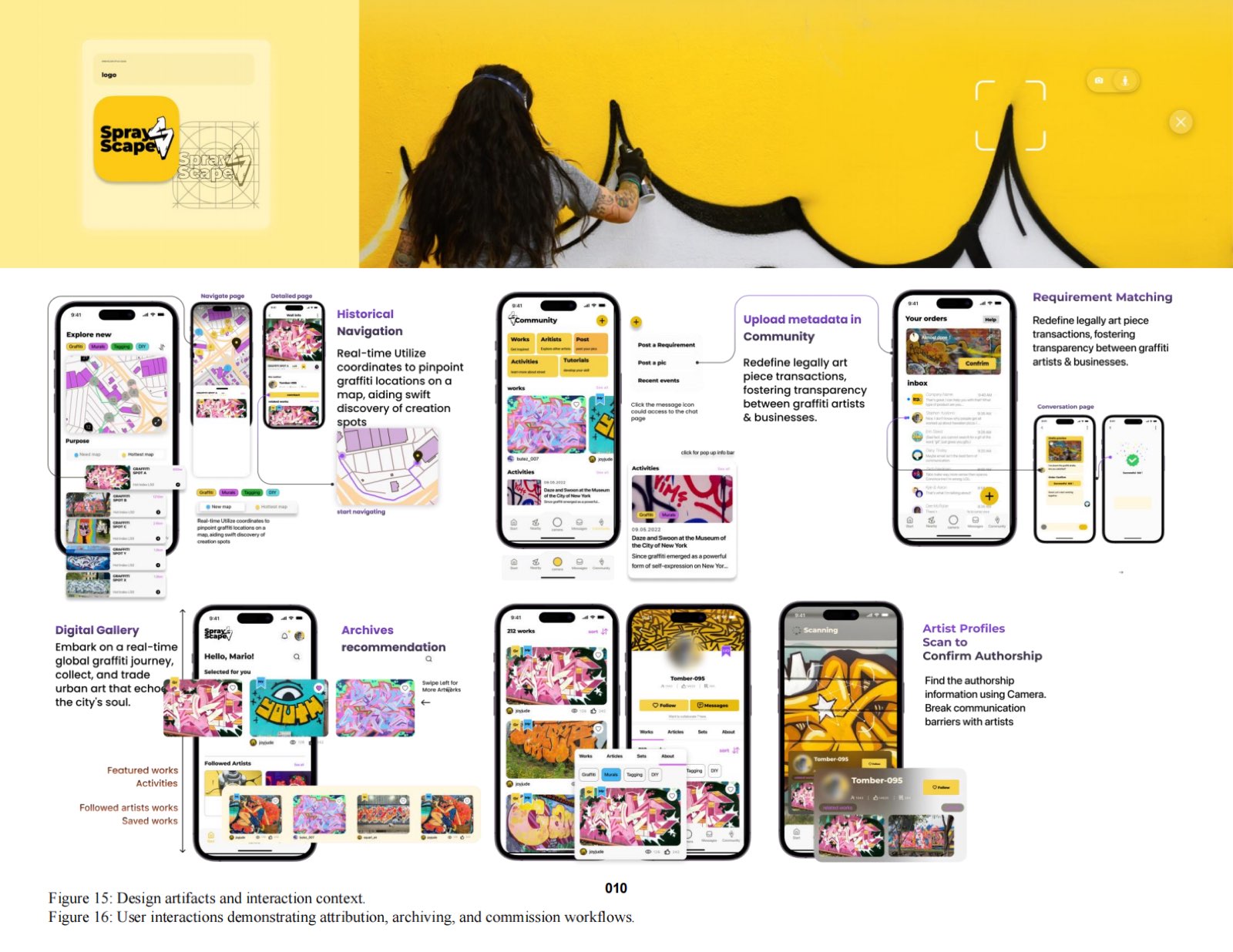
The prototype combines capture, browsing, authorship records, and contextual replay. The later MR extension uses wall and room context as part of the interface rather than decoration.
This turns SprayScape into a service system for public creativity: documentation, negotiation, rediscovery, and memory.
Results & Impact
The case now presents SprayScape as a spatial archive prototype, not a visual-sharing concept. The evidence is the service flow, MR interface direction, and portfolio boards showing how wall, artwork, location, and viewer context stay connected.

Lessons Learned
The technology matters only when it preserves what the ordinary archive loses. For this case, MR is useful because scale, placement, and wall context are part of the artwork.
What's Next
A future version should test the archive flow with artists, local viewers, and property stakeholders to define what metadata feels useful instead of extractive.
Continue exploring